

Carolina Herrera has created a life living between worlds. Raised in Argentina by Peruvian parents, the photojournalist has forged a professional path thousands of miles away in New York City. In many ways her storytelling is a reflection of this identity tightrope, detailing the human experiences of migration in its many complicated forms.
Her photojournalism work has appeared everywhere from NPR, to Reuters, to the New York Times, and in 2025 she received the Canon Award at the Eddie Adams Workshop. She was selected for the Bronx Documentary Film Fellowship in the same year and later produced El Nido, a short documentary that won the Award of Excellence from The Alexia (formerly the Alexia Foundation) in 2026.
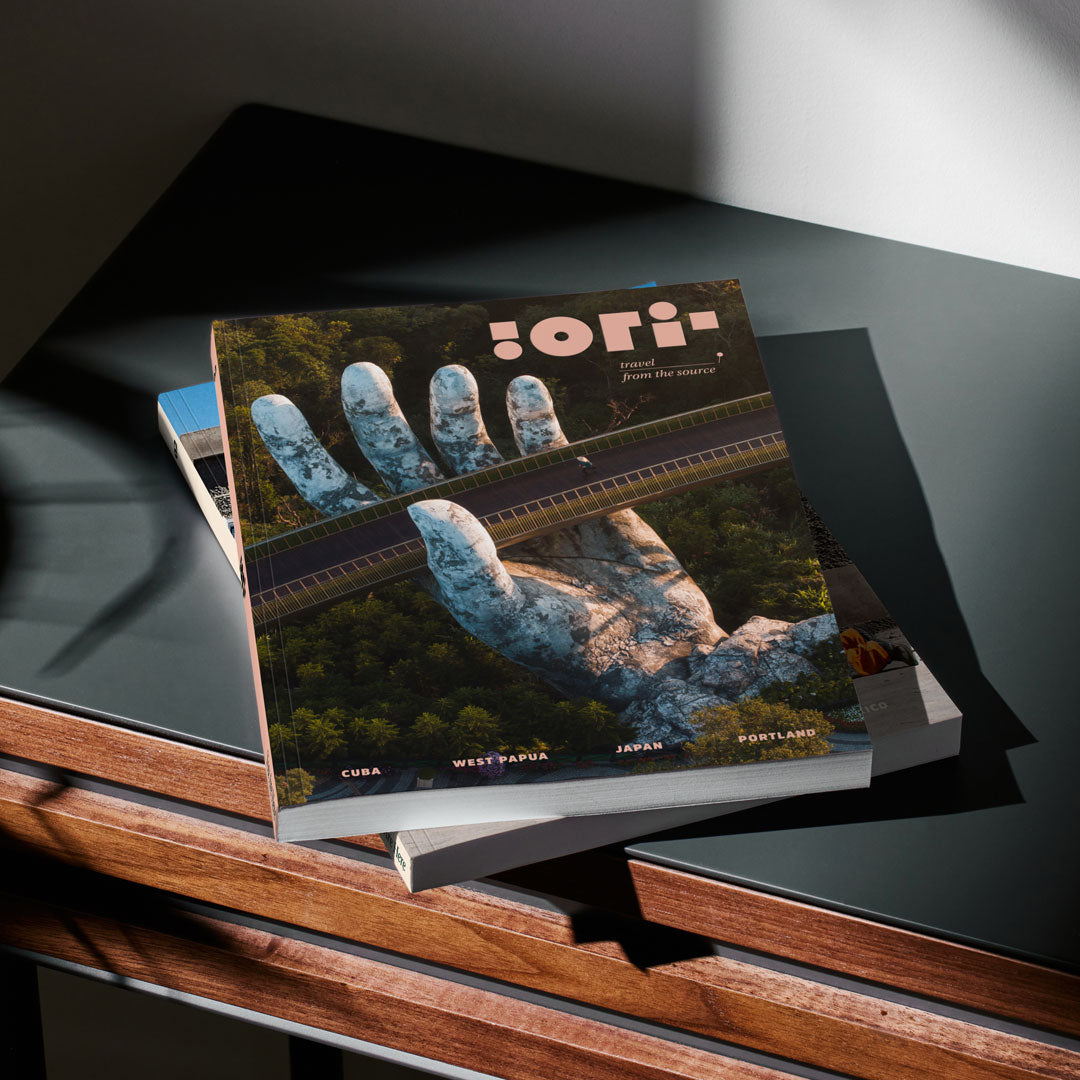
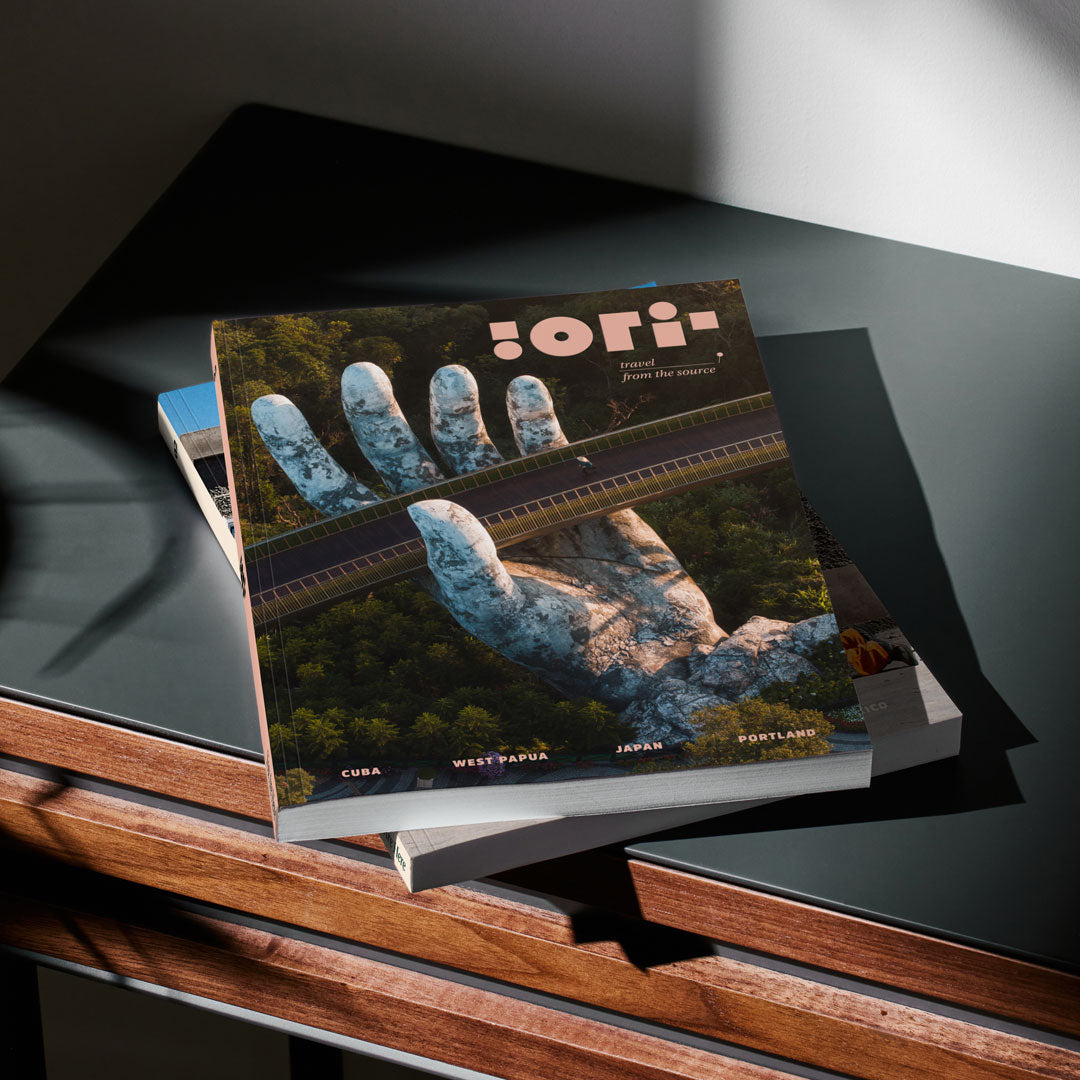
This fall, Herrera makes her debut in Ori Issue 07. In this edition of Makers, we caught up with the rising talent to hear more about her work, and why, in a changing world, it's more important than ever.

ORI: How did you start telling stories?
CH: I think I started telling stories long before I realized I was a storyteller. One of my earliest memories is going through our family albums, putting the photographs in a sequence, and writing little stories or captions to go with them.
My parents weren’t photographers, but there were always cameras and video cameras around our home. They loved documenting everything: family gatherings, everyday moments, holidays, our lives. I think that instinct to document was something I absorbed from them without even realizing it.
Were you always working as a journalist?
No, not at all. I actually studied and worked as a graphic designer in Buenos Aires, Argentina which taught me how to think visually and conceptually. Over time, I realized I wanted to use images to connect with people and understand their experiences. I started studying photojournalism and volunteering with animal rescue organizations, where I was constantly surrounded by stories of vulnerability, displacement, and resilience. Little by little, photography became my way of understanding the world. I wouldn’t say I ever planned to become a journalist—it was more something I discovered along the way.
What brought you to New York? Was it what you expected?
I came to New York in 2024 to continue my education and immerse myself more deeply in documentary photography. I came to study at the International Center of Photography, which felt like an important step in my professional career.
New York was everything I expected in some ways, and completely different in others. It’s intense and challenging, but also incredibly inspiring. Being here has pushed me both personally and creatively, and has given me the opportunity to meet people and stories that have deeply influenced my work.

How did you know you wanted to become a journalist and documentarian?
In February 2019, when I was 26, I took my first solo trip to Kenya to volunteer at a rural school. I spent a month and a half living with a Maasai family in a small village called Olmaroroi, where I slept in a small corrugated metal house with no electricity or running water, far removed from the comforts I had grown up with.
Every day, I would go to the school to help with English classes, and afterwards I would spend time playing with the children at home. It was the first time I experienced this feeling of being completely immersed in other people’s lives, of connecting with them and becoming genuinely curious about their experiences and their way of seeing the world.
At that point, I knew little about documentary photography or journalism, but I was sure that I wanted to keep having these kinds of experiences for the rest of my life. Looking back, I think that trip was the beginning of everything.
What types of stories are you drawn to?
I’m drawn to stories about migration, identity, and belonging. I was born in Buenos Aires to Peruvian parents, and throughout my life I’ve experienced different forms of migration and separation within my own family. In 2014, my parents and younger brothers moved to the U.S., so I know what it feels like to have people you love leave. Now that I’ve migrated myself, I also understand what it means to leave people you love behind and to build a new life somewhere else. Experiencing migration from both perspectives has deeply shaped the way I look at these stories, not just as a political or social issue, but as something deeply personal and emotional.
That’s probably why I’m especially drawn to migrant families and children. I’m interested in how larger issues like migration and displacement shape something as intimate as family life, and how people rebuild a sense of home in a new place.

Whose photography has influenced you the most?
There are many photographers who have influenced the way I think about storytelling. Two photographers who have really influenced me are Lynsey Addario and Sarah Blesener. I admire how they approach complex social and political issues through deeply human stories, and how their work creates space for people to tell their own stories rather than reducing them to a single narrative.
I’ve always admired Lynsey not only for her work, but also for the way she has built her career as a woman in a field that can be incredibly demanding and challenging. There’s a kind of courage in the way she puts herself in difficult and sometimes dangerous situations to tell stories that matter. I really admire her determination, her strength, and the commitment she has to her work.
With Sarah, I’m drawn to something very different. I love the sensitivity and vulnerability in her photography. I think there’s a lot of courage in allowing yourself to be vulnerable and emotionally present with the people you photograph. Her work reminds me that documentary photography doesn’t always have to be loud or confrontational to be powerful.
In very different ways, I think they both remind me to take risks, to stay curious, and to allow myself to be fully present in the stories I’m telling.
What kinds of stories do you work on in New York?
In New York, I primarily focus on stories of migration within the Latino community. Much of my work centers on motherhood and family, particularly on how children experience displacement and adapt to a new environment. I’m interested in the emotional side of migration and in how families navigate the challenges of building a new life while holding on to their identity and sense of home.
 Why is New York a good venue for your photography and storytelling?
New York is an incredibly meaningful place for my work because it’s a city shaped by migration. There are so many different communities, languages, and stories living alongside each other, and I’m constantly encountering people whose experiences connect with the questions I’m interested in.
You are an immersive storyteller. What is the advantage of embedding yourself within your projects?
For me, embedding myself in a story is not just a working method, it’s how I naturally connect with people. I need time to get to know someone before I can really understand what I’m looking at through my camera. Sometimes that means showing up without it and simply being present.
With the families I photograph, especially mothers and children, I try to become part of their everyday life. I might spend a whole day with them, follow their routines, share a meal, play with the kids, or simply sit and listen. I think those moments of being present without the camera are just as important as the moments when I’m photographing. For me, the closer I get to people, the more honest and nuanced the story becomes.
 Why is documenting stories important?
Because it leaves a record, a kind of proof that something happened, that someone existed. But beyond that, I deeply believe in the power of storytelling. We are visual beings; we connect with what we see and, even more importantly, with what it makes us feel. Numbers and facts can tell us what is happening, but a story can make us care about it.
What is something you have learned from your work?
I’ve learned to let go of the idea that I already know what a story is before I enter it. People are always more complex than the labels we put on them, and the more time I spend with someone, the more I realize how much there is beneath the surface.
What’s your best advice for a young journalist starting out?
Stay curious and don’t be afraid to take the long way. You don’t need to have everything figured out at the beginning, and you don’t need to force yourself into a particular definition of what a journalist or photographer should be. Spend time with people. Listen more than you speak. Be willing to show up without a camera and simply be present. The work will come from the relationships you build and from genuinely caring about the people whose stories you’re telling. And most importantly, develop your own voice. Your life, your experiences, and the way you see the world are part of what makes your work unique. Don’t be afraid to let that come through.
You are making your Ori debut in Issue 07. Why did the publication resonate with you?
Ori resonated with me because of the way it approaches travel through people and their experiences, rather than simply through places. That feels very connected to the way I approach documentary photography. I’m less interested in simply showing a place than in understanding the people who live there, their stories, and what that place means to them.
To follow more of Herrera's work, check out her website or follow her on Instagram.